Start with the spot that makes an ordinary day harder: the counter where you need to cook, the chair buried under clothes, or the doorway you squeeze past. Finish that small area before moving to another room.
If exits are blocked or you find serious mold, pests, unstable piles, or hazardous materials, get suitable help first. The plan below is for manageable household sorting.
Choose a small job you can finish
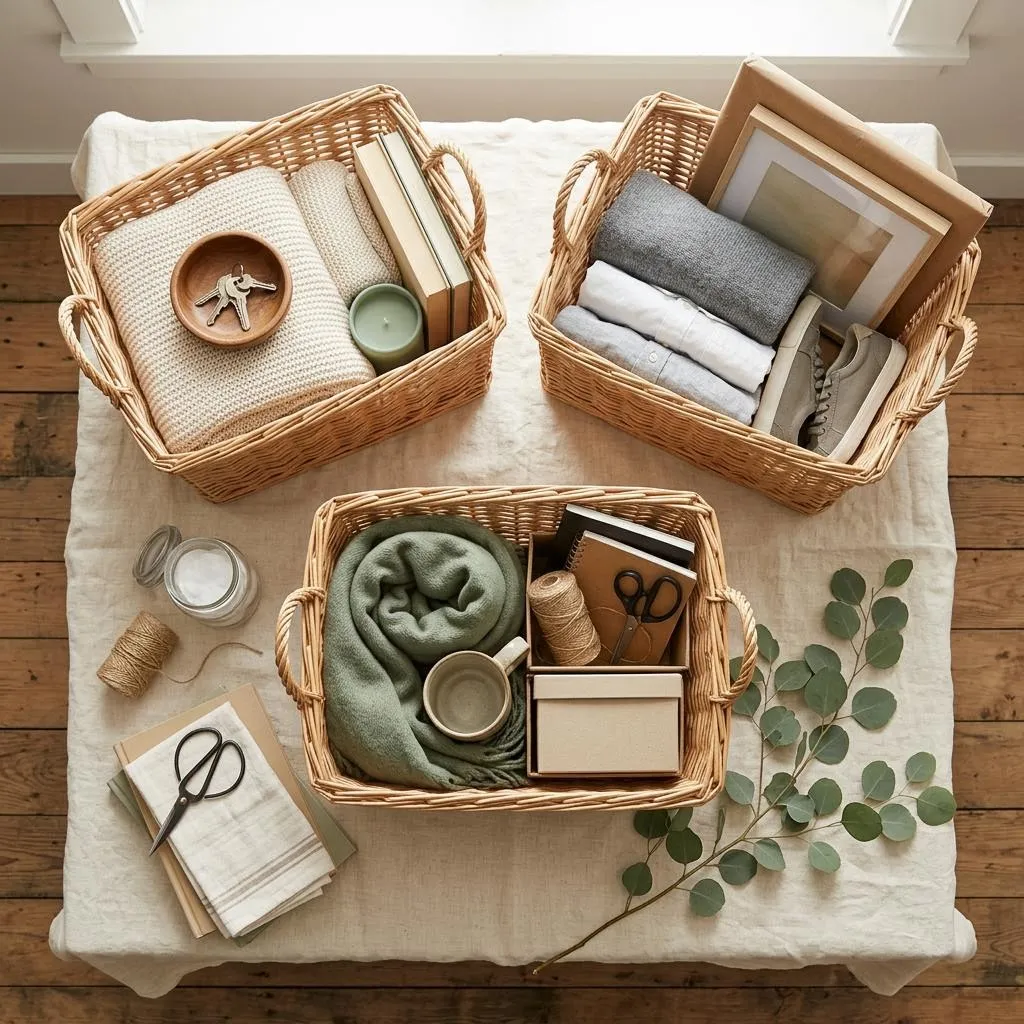
Pick one drawer, shelf, or section of counter. Set a timer that leaves a few minutes for putting things away. Label four temporary containers: keep here, move elsewhere, let go, and decide later.
Check where donations, recycling, and hazardous waste can go before filling bags. If you plan to sell things, choose a listing deadline and a backup plan for anything that doesn't sell.
Make a session smaller when needed. Ten completed minutes that restore a drawer are more useful than an entire room emptied onto the floor.
Kitchen: make room to cook
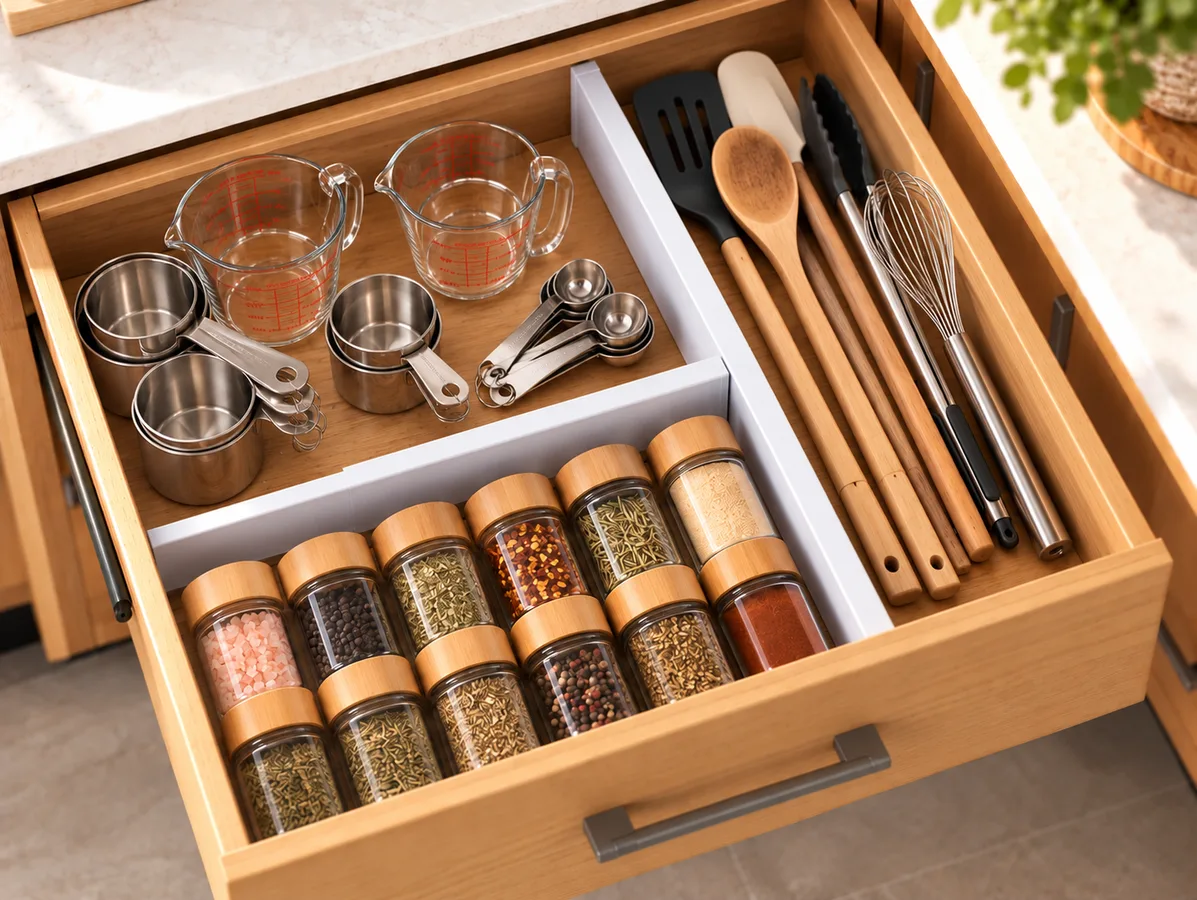
Clear the surface where you prepare meals. Put daily tools near their jobs, set aside gadgets you don't use, and check damaged food-contact items against their care instructions.
Next, check one food shelf for package condition, instructions, and what should be used soon. Avoid a total pantry empty-out on the same day unless you can finish it. Measure the remaining contents before choosing dividers or bins. Use our drawer organization guide for a complete small project.
Pantry: see what is ready to use
Group food around meals you actually make. Put suitable opened items and use-soon foods in a visible location. Record backups before the next shopping trip. Do not throw away food solely because different kinds of date labels look unfamiliar; consult appropriate food-safety guidance.
A pantry is finished when you can see the categories, keep packaging closed, and write a shopping list without buying duplicates. It does not need identical jars. Our small pantry guide offers specific layouts.
Bathroom: clear space for the daily routine
Give current toiletries the easiest space and keep backups in a dry reserve spot. Check their condition and disposal instructions. Store medicines as their labels and pharmacist direct, and keep cleaners secured.
Remove empty packaging, broken accessories, and linens that no longer serve your household. Dry towels fully before storage. A shallow everyday kit can be more practical than filling every inch of the vanity.
Bedroom and closet: make clothes easier to put away
Begin with a clear route around the bed and a small usable bedside area. Return laundry and unrelated items to their actual homes. Then work through one clothing category, considering current fit, comfort, and real activities.
Keep sentimental clothing separate from everyday wardrobe decisions. Ask permission before moving or removing another person's belongings. A dated review container may help with ordinary uncertain items; it should not become a reason to postpone every decision. Try our small closet plan for the next session.
Living room: give everyday activities a home
List what happens here: reading, games, television, children's play, or working from a laptop. Assign each activity a small accessible home. Move occasional equipment elsewhere if it crowds daily use.
Ask before clearing someone else's project. Give current books and games a shelf or basket, and decide together what can move elsewhere. Leave room for the activities you enjoy rather than aiming for permanently bare surfaces.
Home office: sort action papers from records
Make two paper groups: things to act on and records to keep. Check tax, legal, work, and personal retention needs before throwing records away; there isn't one discard date that fits everything.
Shred sensitive papers when they're ready to go, label cables before moving them, and keep packaging still needed for a return. Aim to finish with a clear place to work and one visible next task.
Entryway: make the next departure easier
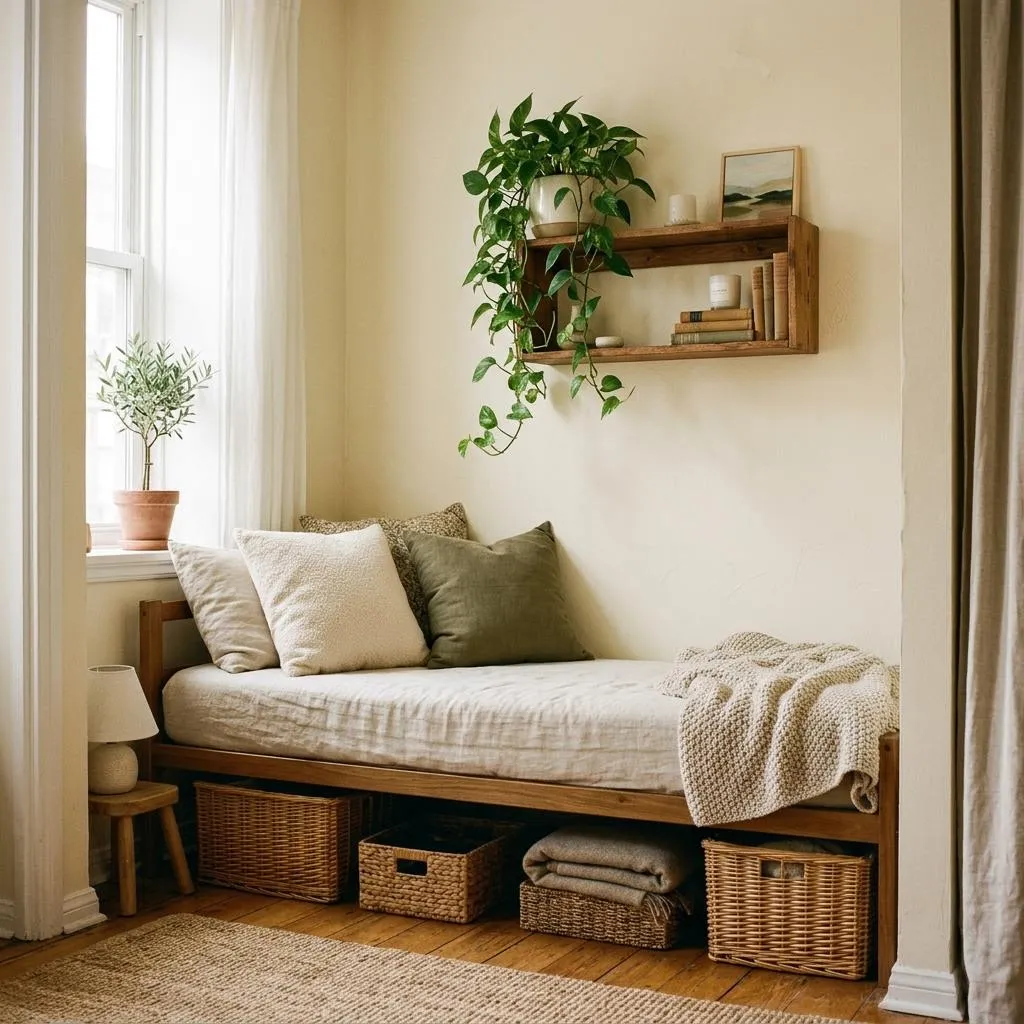
Choose current shoes and bags, and move seasonal overflow to suitable storage. Assign a small home for keys and items leaving the house. Keep the door swing and exit clear.
Do not let the return pile become another indefinite collection. Set a day to return books, send parcels, and deliver donations. See entryway ideas for small homes for a practical layout without a dedicated hall.
Laundry room: give each stage a destination
Separate dirty collection, clean folding, and supplies, even if they share a single shelf. Return clean clothing promptly enough that the basket can resume its job. Store detergent in original packaging, secured according to labels.
Follow appliance maintenance instructions and keep ventilation and access clear. Remove unrelated supplies from the machine tops if they interfere with safe operation. A laundry system should make the next load easier, not become a storage platform.
Garage: safety before storage capacity
Clear exits, electrical panels, and essential access before sorting hobby equipment. Separate usable tools from damaged items that need repair. Use local hazardous-waste guidance for paint, solvents, and batteries.
Do not install wall storage without checking the wall construction, utilities, fixing requirements, and load limits. Keep heavy items low and secure tall storage appropriately. Start with one category such as garden tools rather than trying to empty the entire garage into the driveway.
Finish by getting outgoing things out
| Group | What happens next | How to prevent a new pile |
|---|---|---|
| Keep here | Return to an accessible home | Stop when the assigned space is full |
| Belongs elsewhere | Carry to its real location | Do not leave it beside the doorway |
| Leaving | Use a checked donation or disposal route | Put the trip on the calendar |
| Review | Label contents and a review date | Keep the container small and revisit it |
Before stopping, put away supplies and restore the room's normal function. Take one measurement or write one next step if needed, but do not start another area.
Keep the progress with a weekly reset
Spend a short session returning strays, clearing one incoming paper pile, and removing prepared outgoing items. Review a category that has started overflowing. Ask whether the cause is too much stock, an inconvenient home, or a routine that needs simplifying.
Use the printable checklist for your next session, or start with 25 things to review when decluttering.