In a small home, a storage fix needs to leave room for living. A basket that blocks the hallway or a table you can't sit at isn't helping, however tidy it looks. Start with the places you walk, cook, work, and relax, then find homes for the things around them.
Measure while the room is in use
Open doors and drawers, pull out chairs, and walk through the room carrying a laundry basket. Note what catches. Measure the remaining storage opportunities only after these ordinary movements work. For rented homes, check permissions before drilling or adding adhesive fixtures.
1. Decide what each spot needs to do
A corner can serve more than one activity, but decide which job gets priority. A dining table may host work during the day and meals later. Give work supplies a nearby return container so the changeover is simple. Avoid a permanent spread that prevents the primary activity.
2. Start with one clear walking route
Remove floor-level obstacles between important destinations and keep exits unobstructed. Do not solve overflow with baskets in a narrow passage. Measure furniture with drawers open before moving it. A clear route often makes a compact home feel and function better than another clever shelf.
3. Give each category a clear limit
Give books a shelf, craft supplies a drawer, or scarves a basket. When it fills, look through the contents before claiming more space. Adjust the space when your needs change, rather than adding a bin every time something overflows.
For a small group of bottles in a narrow cabinet, try a nine-inch paper circle to check the fit. Leave room to turn the tray, grip a bottle, and close the door.
4. Move occasional items away from prime space
Keep everyday tools at comfortable reach and less-used belongings in suitable secondary storage. Label them clearly so “out of the way” does not become “lost.” Avoid storing sensitive materials in damp or extreme environments. Keep heavy boxes low even if a high shelf is technically empty.
5. Put suitable wall space to work
A shelf or hook can free a work surface if the wall, fixings, and load suit the installation. Check for hidden utilities and follow mounting instructions. Use a freestanding alternative when drilling isn't suitable or allowed.
6. Use door space only when the door still works
Measure door clearance and test an organizer's depth with cardboard. It should close fully without covering a lock or crowding the walkway. Light accessories are a better fit than heavy overflow.
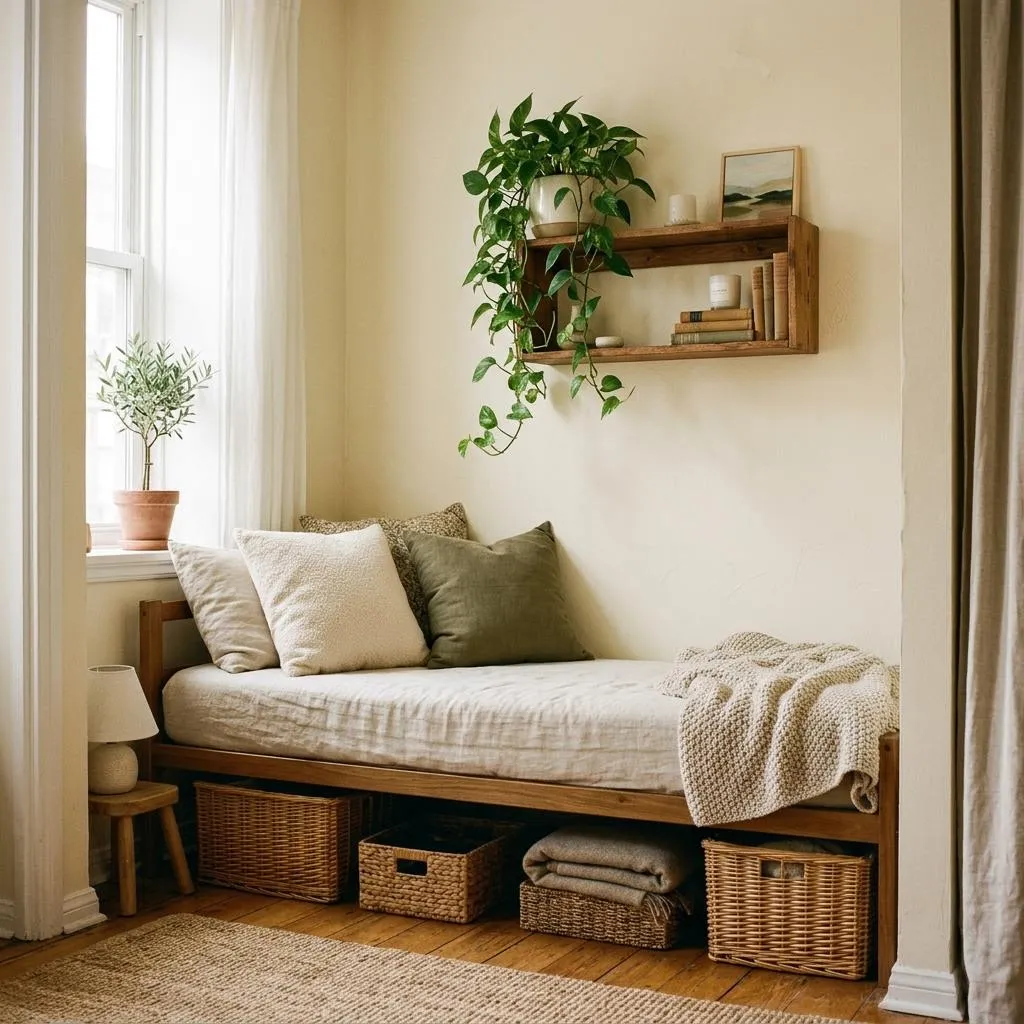
7. Make under-bed storage selective
Measure clearance including wheels or handles, then check that the container can be pulled out completely. Store appropriate clean, dry occasional items and keep access for cleaning. Do not block required ventilation or hide items you need every morning beneath a bed that is difficult to move.
8. Keep stacks easy to lift
Bowls and similar durable items may nest well, but avoid stacks so deep that a small task requires unloading everything. Protect surfaces as directed by the manufacturer. Put the most-used piece on top where possible. If the arrangement fails repeatedly, reduce the stack rather than adding another layer.
9. Make a portable daily kit
Gather a routine's small supplies into one light existing container: desk essentials, sewing tools, or personal care items. Retrieve the group and return it afterward. Keep hazardous or sharp supplies appropriately secured. A kit should save steps, not become a heavy mixed box that nobody wants to lift.
10. Choose a job for storage furniture
Choose what would live inside a storage bench or table before buying it. Check the opening as well as the outside dimensions. If reaching a blanket means moving everything off the top, a nearby shelf may work better.
11. Keep flat surfaces partly available
Leave working room on a counter, bedside table, or desk rather than covering it with organizers. A shallow tray can define a small allowed group. When the tray overflows, review what belongs there. An empty patch of surface is useful capacity for daily life, not wasted space.
12. Reduce packaging without losing information
Remove unnecessary outer cartons when safe, but keep instructions, allergens, dates, and product identification where required. Never decant hazardous supplies into attractive unmarked containers. Original packaging is often the simplest option. Avoid creating extra cleaning and labeling work solely for appearance.
13. Give incoming paper a short route
Choose one spot for mail that needs action and one place for papers to keep. Put unwanted paper in recycling, and set aside documents with personal details for shredding. Follow retention requirements for important records. Open mail regularly enough that the boundary stays usable. A large decorative basket that simply hides months of decisions is not a filing system.
14. Rotate seasonal things when it helps
Seasonal clothing or a portion of toys may live outside the active area if suitable space exists and the household agrees. Label the stored items and check them when you swap seasonal clothes or rotate toys. Do not invent a complex rotation schedule that becomes another chore. Sometimes a smaller permanent collection is easier.
15. Put strays away before bed
Carry one small basket through shared areas and return strays to their actual homes. Empty it before finishing. Notice repeat offenders: their homes may be too far away, too crowded, or hard to open. Change the location before concluding that a person needs more discipline.
Which storage idea fits your routine?
| Storage idea | Space gained | Daily effort to consider |
|---|---|---|
| Under-bed box | Occasional storage | Pulling it out and keeping the floor clean |
| High shelf | Less-used light items | Safe access and installation |
| Portable kit | Flexible shared surface | Returning the kit after each use |
| Door organizer | Light small-item storage | Clearance, stability, and visibility |
A small-space completion check
- Doors, drawers, and chairs work normally.
- Exits and walking routes remain clear.
- Heavy objects are stored safely.
- Daily items can be returned without rearranging a stack.
- Every new container has a specific purpose.
- One surface remains available for use.
Small-space questions
What should I organize first in a studio?
Start with a spot that needs to change jobs, such as the work-and-dining table. Give those supplies a portable home. Our small entryway ideas and small closet organization can help with the next area.