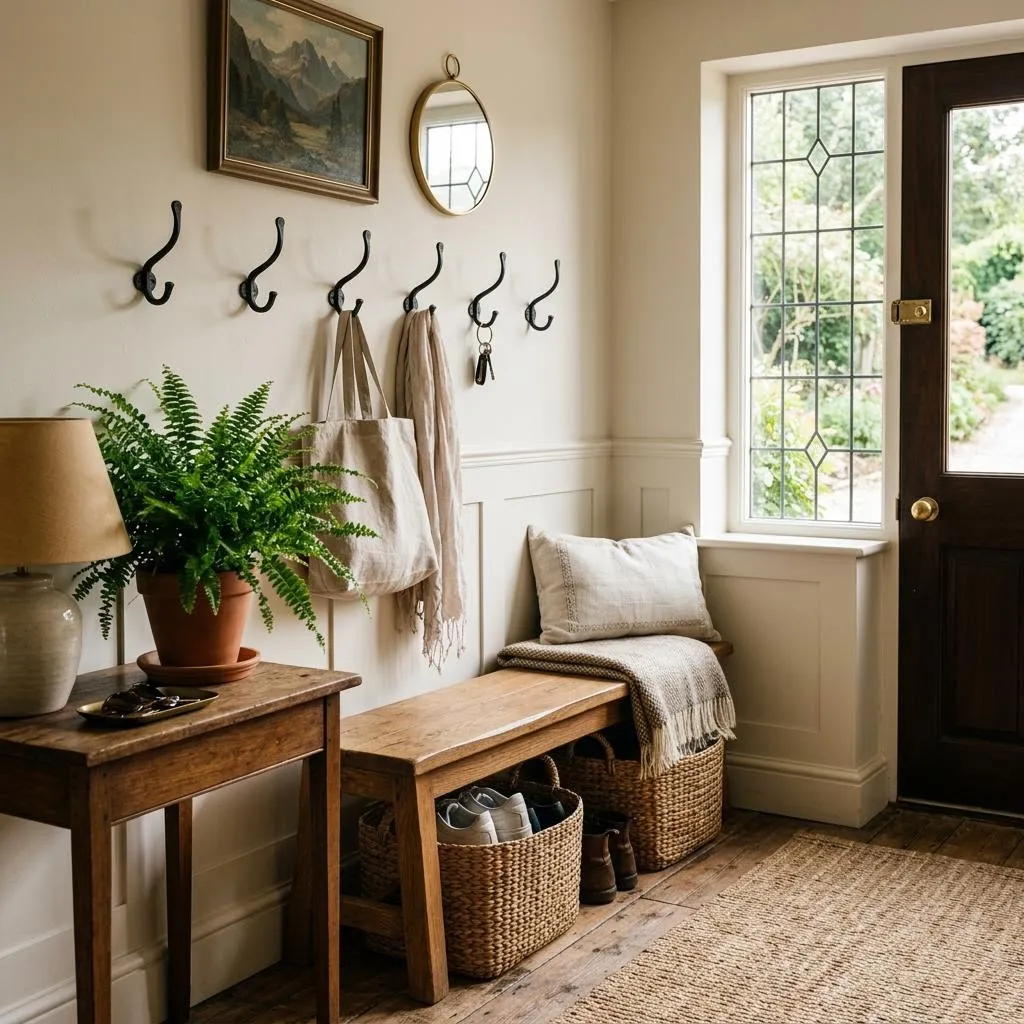
You walk in with groceries, drop your keys somewhere, and kick off your shoes. By morning, finding everything again feels like a small scavenger hunt. A good entryway setup gives those everyday things a place to land, even if your "entryway" is just a wall beside the front door.
Start with the things you carry every day. A tray, a few hooks, and room for your current shoes can do more than a large cabinet that gets in the way.
Watch what happens when you come home
For a day or two, notice where things land. Does your bag end up on a dining chair? Do keys disappear under the mail? Are dog leashes always somewhere other than the door? Those are the spots to fix first.
Pay attention when you leave, too. Put the things you usually forget near the point where you reach for them. If you use a walker or stroller, give it a convenient parking spot before adding smaller storage pieces.
Open the door fully and walk through with a shopping bag. Keep that path, nearby heaters, and utility access clear. Measure the wall and floor space that's left. A shelf that fits on paper can still catch your shoulder when your hands are full.
Give your keys a spot you'll actually use
Put a shallow tray where you already tend to set your keys down. An existing shelf, a small dish on a side table, or a spot inside a nearby closet can work. Keep keys and valuables out of sight and reach from outside the doorway.
Choose a small tray so it doesn't invite a whole drawer's worth of clutter. Keys and a wallet are one job; receipts, screwdrivers, and spare batteries need somewhere else to live. Move those strays during your weekly tidy-up rather than buying a bigger tray.
Keep just your everyday shoes by the door
Pick the shoes each person wears during a normal week. Move dress shoes, off-season boots, and pairs waiting for repair to another spot. The doorway is useful space, so let the current favorites have it.
A washable tray can catch mud and grit without taking up as much room as a shoe cabinet. Empty any pooled water, keep the edges flat, and let wet shoes dry before putting them away. If a tray crowds the walkway, use the nearest closet instead.
Give each person a clear share of the space. When shoes spill beyond it, take a minute to swap out the pairs nobody has worn lately.
Make bags easy to put away
Give each person's daily bag one reachable hook, shelf, or closet section. A hook buried behind coats is rarely easier than the chair everyone already uses. Try hanging a loaded bag there and see whether putting it away feels natural.
Use fixings suited to the wall and the weight of a full bag, and check rental rules before drilling. Position hooks where they won't catch someone walking past. Keep medicines, sharp tools, or other hazards in bags out of children's reach.
For small accessories, over-door pockets in a nearby closet can hold gloves, a reusable shopping bag, or a dog leash. Check that the door still closes easily. Keep the categories broad enough that everyone can remember what goes where.
Give mail and returns separate places
Use one small spot for papers that need action: a school form to sign, a bill to handle, or an invitation to answer. Recycle obvious junk as it arrives, file papers you need to keep, and shred sensitive documents when they're ready to go.
Put library books and parcels in a separate outgoing basket. Tie emptying it to something you already do, such as Saturday errands. A basket marked "returns" only helps if the contents eventually leave.
Keep bulky donation bags somewhere that doesn't block the exit, and put the drop-off trip on your calendar. That makes them an errand rather than a permanent feature of the hall.
Test the space before buying furniture
Use cardboard or removable tape to mark a bench or cabinet's footprint. Open the door, carry groceries past it, and try the nearby closet doors. If you're considering a bench, leave room to sit and bend down to your shoes.
Check the storage inside, too. Will your boots fit through the opening? Is there room for the largest backpack? Follow the furniture's weight and installation instructions, especially if it needs anchoring.
| Option | A good fit when | Think twice if |
|---|---|---|
| Existing shelf and small tray | You mainly need a home for keys and a wallet | The shelf blocks a door or heater |
| Wall hooks | Bags and coats need a reachable spot | You can't mount them securely |
| Narrow storage bench | You want a place to sit while putting on shoes | Sitting there would block the walkway |
| Nearby closet shelf | There's almost no room beside the front door | Reaching it is awkward for the person using it |
Sometimes the best choice is no new furniture. A shelf in the next closet still counts as entryway storage if it makes leaving the house easier.
Swap out gear as the weather changes
Keep the coats, umbrellas, hats, and gloves you're using now close by. Put clean, dry off-season items in labeled storage elsewhere. Leave a little spare room for those weeks when the weather can't make up its mind.
Check bags and coat pockets before replacing missing gloves. Matching pairs have a habit of splitting up. Give damp coats and umbrellas room to dry before putting them in a closed cabinet or crowded closet.
Try the setup for a week
Start with what you own: one tray, a shoe area, and a place for bags. Spend a minute returning things each evening. Notice what keeps landing in the wrong spot and ask why.
If a backpack still ends up on a chair, try moving its hook lower or closer to the door. If mail buries the keys, separate the two spots. Adjust the location before adding another container.
At the end of the week, keep what worked. You'll have a much better idea of whether you need a shelf, a second hook, or simply fewer shoes at the door.
A quick weekly reset
- Clear the walkway and check that the door opens fully.
- Move extra shoes and bags back to their usual storage.
- Wipe the shoe tray and empty any collected water.
- Handle papers that need a reply or signature.
- Take returns and donations on their planned trip.
- Swap weather gear and reunite stray gloves.
A couple of common questions
What if the front door opens directly into the living room?
Borrow a small spot from furniture you already have. A tray on the end of a bookcase or a shelf in a nearby closet can catch the essentials without dividing the room. Keep shoes and bags away from the main route through the living space.
How do I make the system work for children?
Give each child a reachable spot for a bag and a clear place for shoes. Use a picture label for younger children, and walk through the routine together: shoes here, bag there. One open basket is usually easier to remember than several hidden compartments.
For the next small spot on your list, try these 15 small-space ideas or the room-by-room decluttering plan.