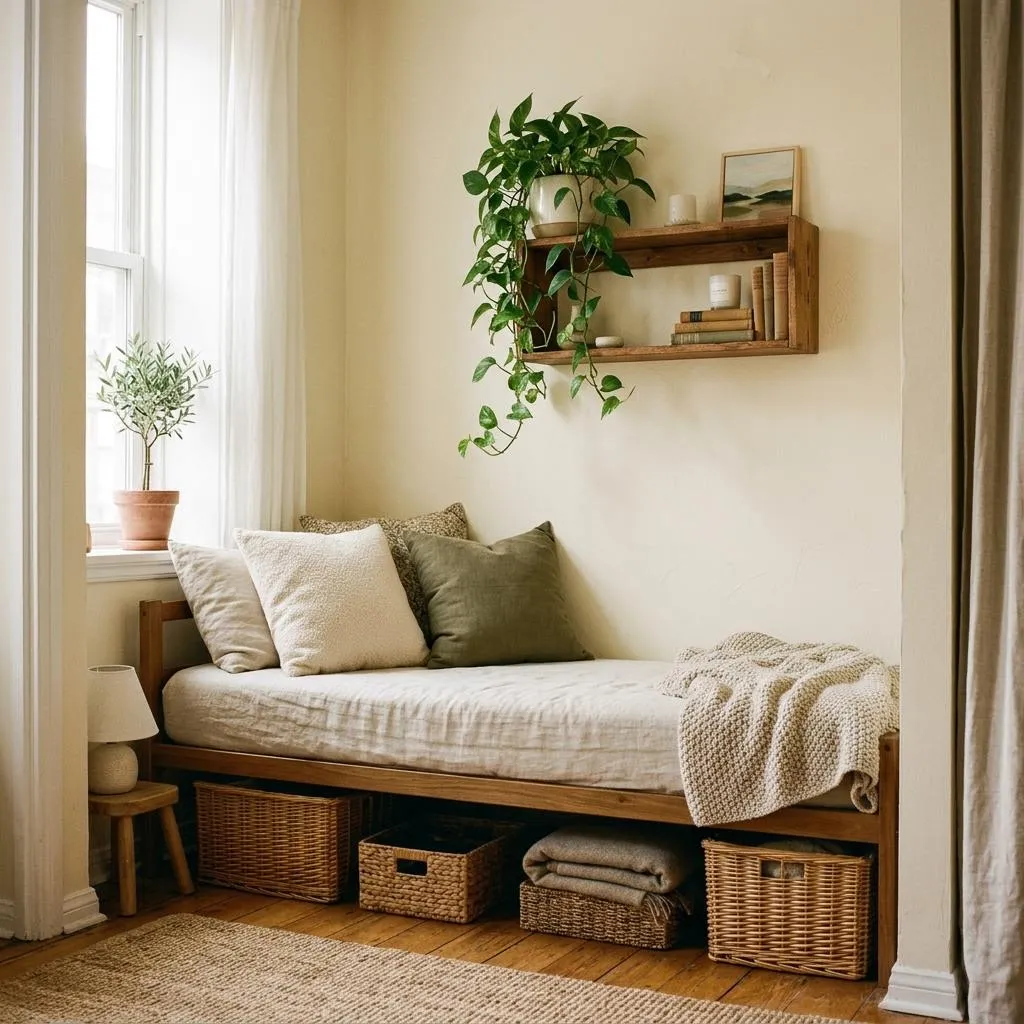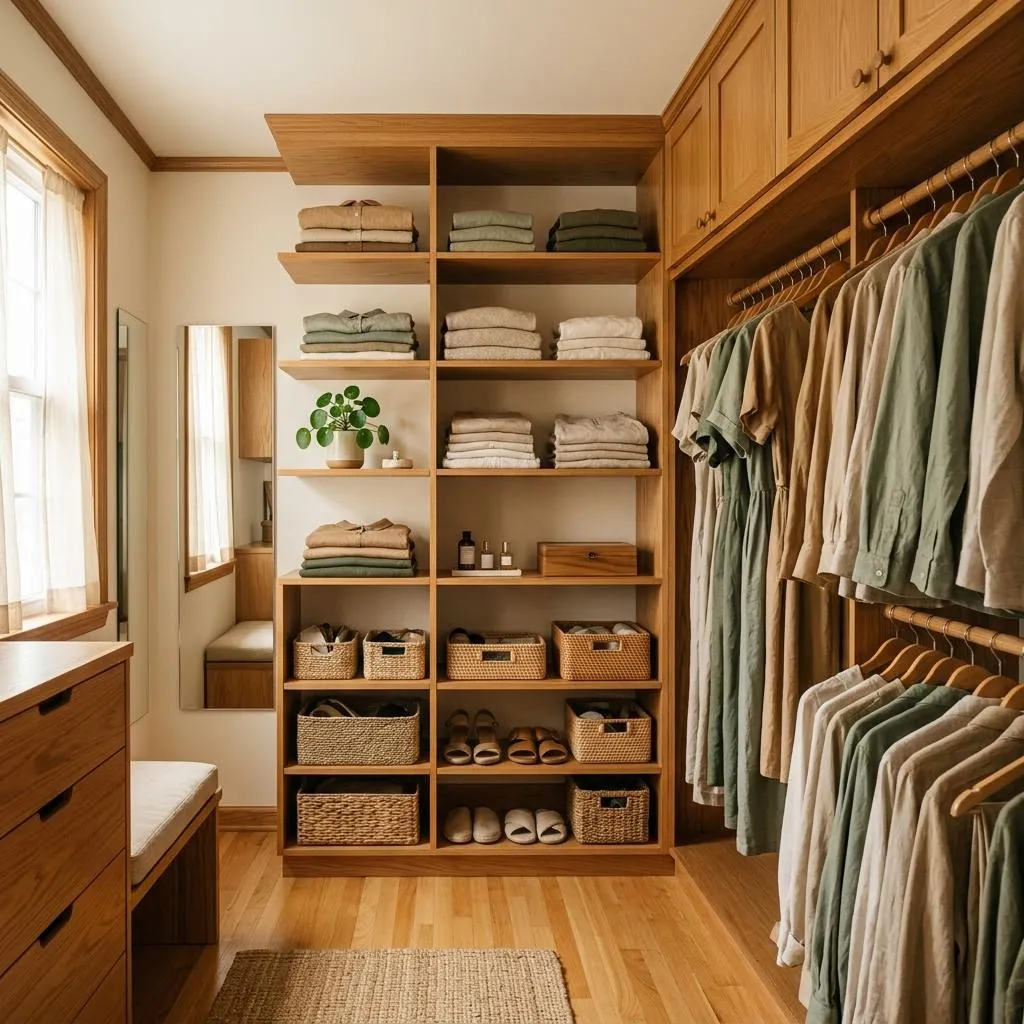
If putting away clean laundry means shoving hangers aside or balancing another stack, your closet needs breathing room. Give the clothes you wear during a normal week the easiest rail and shelves.
Work through one category at a time. The whole wardrobe can stay off the bed, and sentimental pieces can wait for a quieter day.
Start with the closet you have
Measure the usable rail length, shelf depth, floor width, and door swing. Note anything that cannot move: a sloping ceiling, access panel, or shared storage. Check that shelves and rails are secure before adding weight.
Include clean laundry when deciding how much room you need. If half your clothes are still in baskets, leave space for them to come back. Sort one category now and tackle the rest later.
Start with one clothing category
Start with something emotionally uncomplicated, such as everyday T-shirts. Gather that category from the closet, dresser, and clean laundry. Use four temporary groups:
- Clothes you wear and can use now.
- Items needing a specific repair or alteration you intend to arrange.
- Pieces ready to leave through a realistic donation, resale, or textile route.
- Uncertain items to review separately.
Write down what each repair needs and when you'll arrange it. If that date keeps slipping, decide whether the piece is worth keeping. Check donation acceptance rules before dropping off clothes; damaged textiles may need another collection route.
Ask what works for your life now
Ask whether it fits comfortably and works for your weather, work, hobbies, or care needs. A winter coat or occasion outfit can still deserve space even when you rarely wear it. Focus on being able to find and put away what you need.
Keep everyday clothes within reach
Make the easiest rail and shelves the active wardrobe. Store clean, fully dry seasonal or occasion items separately if you have suitable space. Label what is inside rather than “miscellaneous.” Avoid damp or extreme environments and check material-specific care guidance.
If no separate space exists, assign the highest or least convenient shelf to occasional pieces and keep its container light. Never use heavy overhead boxes or climb on unstable furniture to reach them. Accessible storage may be more valuable than using every inch.
Choose what should hang and what should fold
Hang clothes that need it or that you retrieve more easily that way. Fold knits according to their care requirements rather than stretching them on hangers. Keep small stacks shallow enough that you can lift one piece without toppling the others.
| Method | Helpful for | Watch for |
|---|---|---|
| Hanging by type | Jackets, dresses, everyday shirts | Crowded rails make returns harder |
| Short folded stacks | Knits and heavier casual pieces | Deep piles hide what is underneath |
| Upright folds in a drawer | T-shirts or soft basics | Folds must suit the fabric and drawer height |
| Labeled occasional box | Clean seasonal items | Too-heavy boxes and forgotten contents |
Try the arrangement with your existing hangers and containers first. A storage purchase cannot compensate for more clothes than the chosen zone can comfortably hold.
Build a layout around your week
Put frequently worn clothing where your hands naturally reach. Group by type, then by a simple order you recognize. Color order is optional. Work uniforms, school clothes, or a limited work capsule can have their own practical section.
Leave enough rail space to slide a hanger without moving an entire row. On shelves, use one existing basket or folded divider to keep smaller categories from spreading. If shoes are stacked in a way that damages them, reduce the stack and move occasional pairs elsewhere.
Make small accessories visible
Put belts and watches in a shallow tray and scarves in a small box. Over-door pockets can help with light accessories if the door still closes and the mounting suits it. Leave locks and exits clear.
Set undecided pieces aside with a review date
Put undecided everyday clothes in a labeled box and choose a date to look again, allowing for the season when you'd wear them. Keep essentials you rely on in reach, and leave someone else's clothes for them to decide.
Open the box on the review date and look at the pieces. Changes in work, health, or weather can change what you need. Keep what has a useful role now and make a plan for the rest.
Try putting an outfit away
Take out an everyday outfit, then put it back. Can you do that while holding a laundry basket? Can each household member reach their own section? If not, reduce the number of categories or bring the active zone lower.
Use this final checklist:
- Rails and shelves are secure and not overloaded.
- Current clothing fits with room to move it.
- Clean laundry has a defined destination.
- Outgoing items have an actual exit plan.
- Occasional boxes have content labels.
- The floor and doorway are clear.
Keep the closet working on laundry day
During the weekly laundry put-away, remove empty packaging, restore folded categories, and notice anything that repeatedly lands outside its home. Once a season, review the active wardrobe and the dated decision box. Keep one small outgoing bag, but empty it through your chosen route rather than accumulating several.
Check what you own before buying another piece for the same job. If your wardrobe needs more room, borrow a nearby drawer for a category rather than squeezing the rail until nothing moves.
Small closet questions
Should I switch to slim matching hangers?
Remove empty hangers and clothes you no longer need first. If the rail is still crowded, check whether slimmer hangers suit your garments before replacing the whole set.
What if the closet is shared?
Agree on a rail or shelf for each person, then decide together where occasional clothes will go. Label shared shelves with names everyone uses, and leave each person's keep-or-donate decisions to them.
For linens on the neighboring shelf, use our linen closet guide. If the overflow extends beyond clothing, start a manageable room-by-room decluttering plan.