A drawer divider can be useful. A drawer divider that is too tall for your drawer is just another thing to store. Before choosing an organizer, look at the small task you want to make easier: finding a bottle, lifting a pan, or putting the mail away.
This guide compares four common storage tools and the situations where they earn their space. For specific kitchen options, see our five kitchen organization finds.
As an Amazon Associate I earn from qualifying purchases. Read our Affiliate Disclosure.
Start with the thing that keeps getting in your way
Describe the problem in one sentence. “The oil is behind all the other bottles” tells you more than “the pantry needs organizing.” So does “the measuring spoons disappear under the spatulas.”
Take out the things that belong elsewhere and try a different grouping. If the problem remains, measure the space and the way you'll use it. Include hinges, shelf supports, and handles. An organizer needs to fit through the opening, not just inside the empty cabinet.
A removable bin for things at the back
A bin lets you bring a whole group forward. Use one for sealed snack packets, baking supplies, or bottles that belong to the same task. A handle helps only if you can grip it and lift the full container comfortably.
Try a box or washable tray you own before choosing a bin. Put it in place, load it with the intended items, and pull it out several times. Check whether a high side hides the labels or catches on the shelf above.
Under a sink, leave the pipes and shutoff valves accessible. Keep cleaners in their original containers and follow their separation and secure-storage instructions. A tray makes drips easier to notice and clean, but it doesn't fix a leaking bottle or make incompatible products suitable to store together. Our under-sink ideas walk through the cabinet layout.
A removable group is especially handy when you wipe the shelf often. If the filled bin becomes too heavy, split it into two smaller groups instead of adding a larger handle.
A shelf riser for short jars and spare height
A riser creates a second level where short jars leave room above them. It can make a back row visible, but check what happens to the shelf space underneath. The legs and platform take up room too.
Measure the tallest item on the top level and the space below the platform. Check the riser's load rating and stability for the items you plan to store. A small pantry accessory isn't automatically suitable for heavy cookware.
Before buying, see whether you can move an adjustable shelf or put short and tall items in separate groups. That may use the height more simply. Don't build a temporary riser from stacked cans or other unstable objects.
Try taking a jar from each level without moving its neighbors. If you still have to unload the front row, a shallower group or a removable tray may be easier to live with.
Drawer dividers for categories that keep mixing
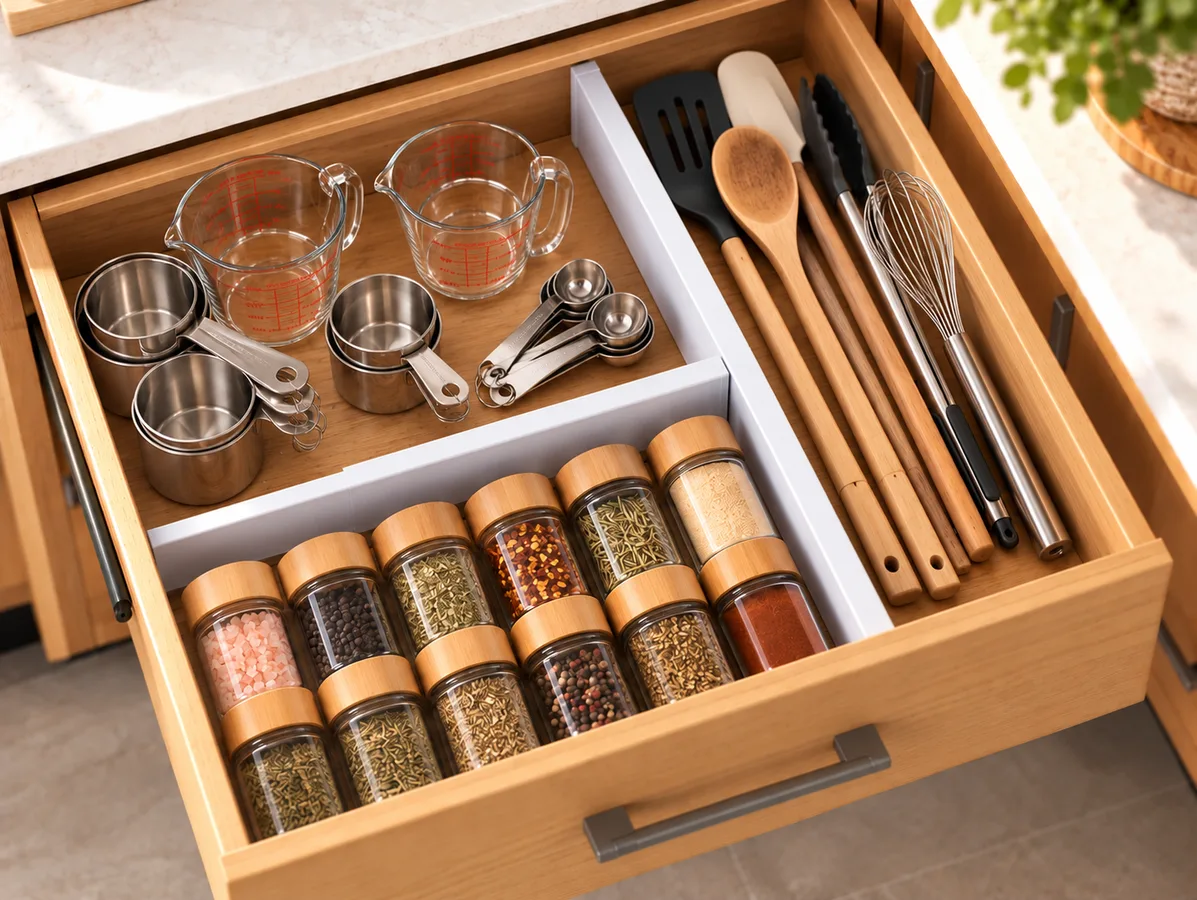
Dividers help when two sensible groups keep sliding together: cooking tools and measuring spoons, or T-shirts and socks. They work best with a few broad sections rather than a tiny space for every object.
Fold clean cardboard into a trial boundary, or arrange shallow containers in the drawer. Use it through a few meals or laundry loads. You'll soon notice which section needs more room and which isn't doing much.
Then check the usable height, width, and depth before choosing a divider. Look below the counter or cabinet frame, where clearance can be tighter than the drawer sides suggest. For tension designs, check the adjustment range and installation instructions, including whether the drawer surface suits them.
Leave room for your hand around the largest item. A divider that squeezes everything into narrower piles hasn't helped. Our kitchen drawer guide shows how to test the layout during normal cleanup.
Door pockets for light accessories
A pocket organizer can give gloves, scarves, or a dog leash a visible home in a nearby closet. Keep each pocket to one easy-to-recognize group so small things don't disappear inside it.
Check door thickness, clearance at the top, hinge loading, and the full door swing. Test the organizer's depth with cardboard and close the door slowly. Follow mounting instructions and rental rules, and leave locks and exits clear.
Keep heavy things on a suitable shelf instead. Accessible pockets aren't a place for medicines, sharp tools, or hazardous cleaning supplies. If adding pockets makes the door hard to use, a small existing shelf section may be a better home for the same accessories.
Compare the tools before choosing one
| Everyday problem | A simple first step | Tool to consider | Check before buying |
|---|---|---|---|
| Small things disappear at the back | Bring daily supplies forward | Removable bin | Opening, grip, and loaded weight |
| Short jars leave spare shelf height | Adjust shelf spacing | Shelf riser | Height, leg positions, and load rating |
| Drawer categories keep mixing | Try cardboard boundaries | Drawer divider | Adjustment range and closure clearance |
| Light accessories have no home | Set aside a closet shelf section | Door pockets | Mounting, door swing, and visibility |
A short shopping checklist
- I know which task the organizer will make easier.
- I've tried a different grouping or an existing container.
- I've measured the storage space and the opening.
- The loaded organizer will be easy to lift or reach.
- Its installation and care instructions suit the location.
- I've checked the seller's current dimensions and return terms.
Keep the measurements with you while shopping. Check usable interior space as well as outside dimensions, especially for bins with thick sides or large handles. Start with one piece rather than a full matching set.
Give the new setup a normal week
Use it while cooking, cleaning, or putting laundry away. Can someone else see where things belong? Can you take one item out without shuffling the rest? Is returning it easier than leaving it on the counter?
If something keeps snagging, change the grouping or location. Keep the seller's return deadline in mind instead of letting an unused organizer become permanent clutter.
For more ideas about making the space itself work, try our small-space guide or the room-by-room decluttering plan.