A small bathroom feels crowded fast: another bottle on the sink, a towel stack that topples, a hairbrush with nowhere to go. Give the daily routine the best space, then move backups out of the way. These ideas help clear the counter without making the room harder to clean.
Check the space around your daily routine
Measure cabinets, drawers, and door swing before adding anything. Leave access to plumbing and ventilation. Avoid shelves that make you reach across a wet floor or bump your head. Store electrical tools away from water and follow their instructions.
1. Keep the sink for daily essentials
Place only the products used in a normal morning or evening within immediate reach. Move occasional treatments and unopened backups to a separate dry zone. Use up open shampoo or body wash before opening another bottle. Follow the label's storage and disposal instructions, and don't keep an expired product just because the bottle is nearly full.
2. Give each person a small kit
Give each person a washable caddy for daily products and a separate spot for shared supplies. Keep toothbrushes where they can dry rather than closing them inside a damp box.
3. Use a tray as a counter boundary
An existing shallow tray can define the small amount that stays out. Leave enough bare space to set down a toiletry bag or wash comfortably. If the tray overflows, move occasional products away rather than upgrading to a larger one. Lift it during cleaning so water does not collect underneath.
4. Fold towels to suit the shelf
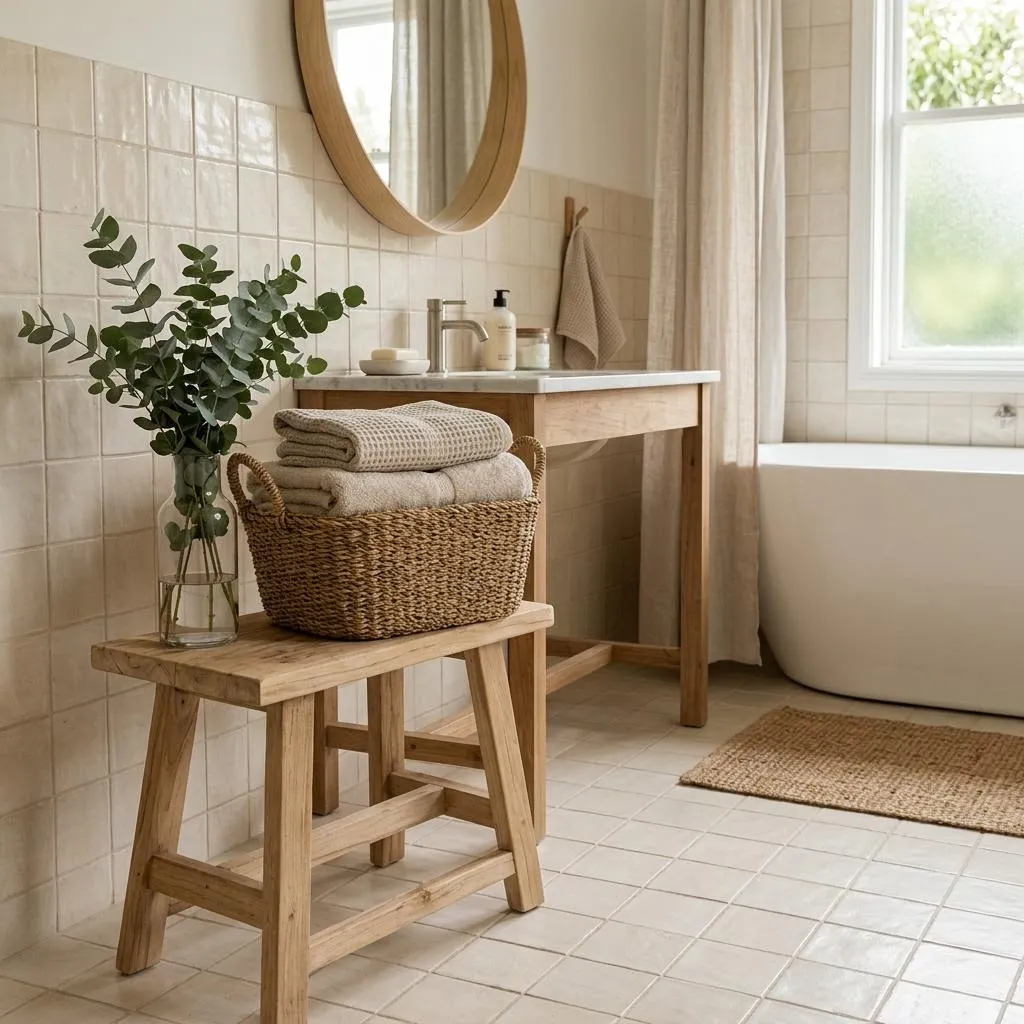
Measure shelf depth and fold a towel into a shape that fits without hanging over the edge. Try a short stack rather than copying a decorative roll. Store only fully dry towels and avoid packing them tightly against a damp wall. Leave enough space to remove one without pulling down the rest.
5. Keep current towels nearby
Choose the quantity that supports your household's laundry routine and available storage. Keep current towels in the bathroom and suitable dry backups elsewhere if needed. A small bathroom does not have to hold every guest towel. For an overflow shelf, follow our linen closet plan.
6. Sort drawers by routine
Create simple sections such as daily face care, dental care, and hair accessories. Use small cleaned containers or folded cardboard as a temporary divider. Check that nothing catches when the drawer closes. Tiny categories often create more work than they save; make the return route obvious.
7. Keep under-sink storage removable
Use light lift-out groups beside the pipes and leave shutoffs visible. Inspect for moisture before adding any liner. Chemicals need appropriate secure storage, not an open decorative basket. The under-sink guide explains how to map plumbing clearance before choosing containers.
8. Try door hooks with a closure test
Check the door's top clearance, hinge load, and any rental restrictions before adding a hook. Test with a light item and ensure the door closes fully. Do not hang things where they obscure a lock or interfere with an exit. Use the manufacturer's mounting and weight instructions.
9. Leave drying space between towels
Spread damp towels so they can dry, rather than piling several on one hook. Use the bathroom's ventilation and move dry spares to a shelf. The drying rail doesn't need to hold your whole towel collection.
10. Add a shelf where it will help
A shelf can help on a suitable wall, but consider fixing locations, hidden pipes, and the load of its contents. Keep heavy objects low and avoid shelves that create a head-strike risk. If you cannot install safely or lack permission, edit the contents of an existing cabinet instead.
11. Keep spare toilet paper in a dry zone
Choose an accessible location away from splashes and persistent humidity. Leave original wrapping on reserves when helpful. A small existing basket may be enough; avoid using the floor around the toilet as overflow storage. Check access from the seated position before deciding a high shelf is a good location.
12. Store medication where its label requires
Check medicine labels and ask your pharmacist about storage; the bathroom's heat and humidity may be unsuitable. Keep medicines secured and use a local take-back service for unwanted supplies.
13. Give hair tools a cool-down routine
Unplug hair tools and let them cool as their instructions direct. Keep hot tools out of plastic bins and cords away from hot surfaces. Once cool, put them in a dry spot away from water.
14. Limit shower products to current use
Move empty bottles out and keep only the products you are actively using. Check the stability and load limit of any caddy. Do not block drainage or create trip hazards. A shower shelf should allow water to drain and surfaces to dry; inspect mounting and suction fixtures regularly.
15. Give hair ties and clips a shallow spot
Hair ties, clips, and similar items are easier to see in a shallow drawer section than a deep jar. Remove broken pieces and keep small choking hazards away from children. Reuse a suitable container first. A system that lets you drop an item back in often lasts longer than individual tiny compartments.
16. Move bulk backups out of the room
If you buy large quantities, choose a suitable dry reserve area elsewhere and record what is there. Store only a practical refill quantity in the bathroom. Before purchasing more, check the reserve. Bulk buying is not a saving if it crowds essential storage or leads to forgotten expired supplies.
17. Attach a reset to cleaning day
Return daily kits, remove empties, wipe storage trays, and inspect for dampness before replacing them. Check towel dryness and keep ventilation unobstructed. If the reset requires unpacking several stacked boxes, reduce the layers. A simple system should make cleaning easier, not add a second project.
Compare before choosing storage
| Need | Try first | Consider only if needed |
|---|---|---|
| Clearer counter | Fewer daily products | A small washable tray |
| Shared supplies | One kit per person | A suitably sized caddy |
| More towel space | Move dry backups elsewhere | A safely installed rail |
| Cluttered drawer | Reused shallow containers | Dividers matched to measured clearance |
Small bathroom questions
Can I use baskets in a humid bathroom?
Choose a spot where the basket can stay dry. If it keeps getting damp or develops a musty smell, switch to a washable container and give the contents more drying room.
Use the printable room reset to turn the changes into a short weekly routine.